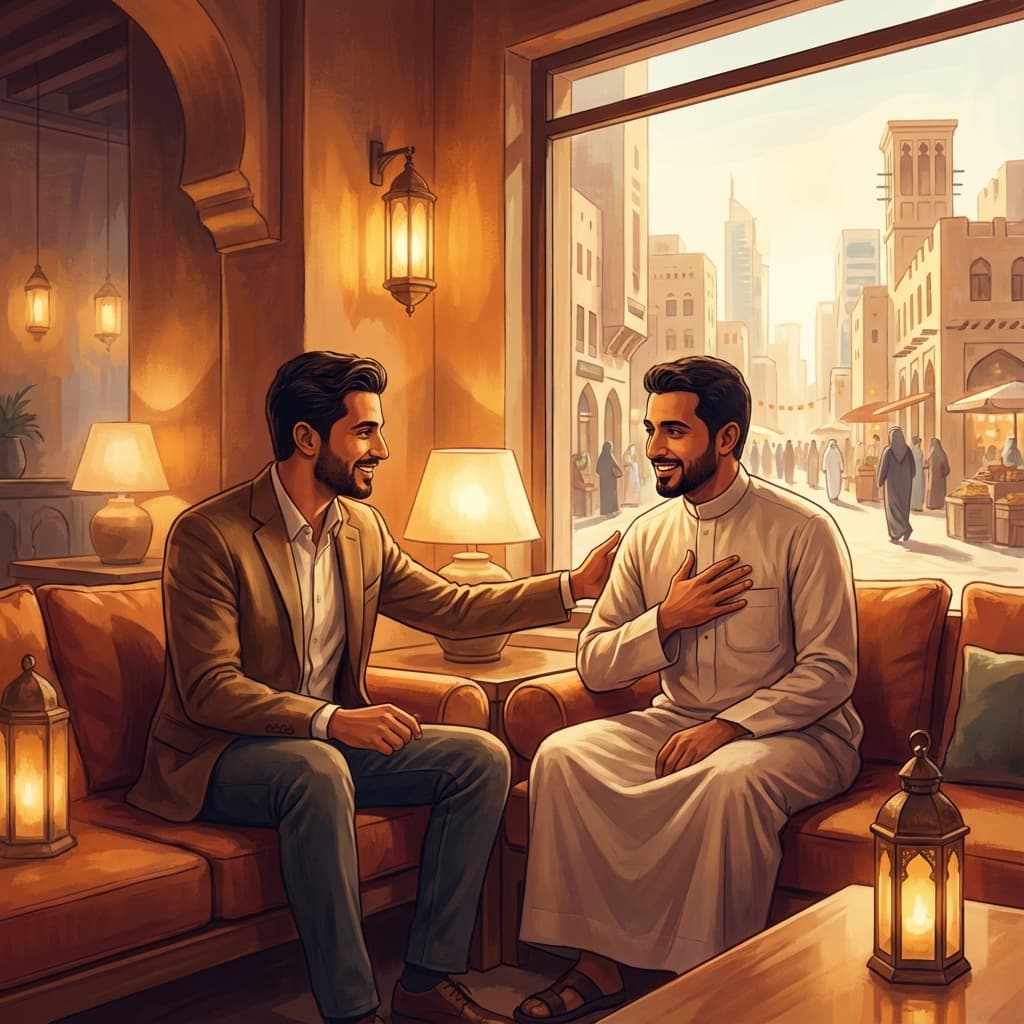
Learning Arabic is not only about mastering grammar, vocabulary, or pronunciation. True fluency comes when you understand how to communicate respectfully, appropriately, and naturally within Arabic-speaking cultures. This is where Arabic communication etiquette becomes essential.
Arabic is spoken by more than **400 million people** across over 20 countries, each with its own cultural nuances. Yet, despite regional diversity, Arabic communication shares deep-rooted values shaped by history, religion, hospitality, honor, and social respect.
At **ArabiUp**, we believe that learning Arabic should empower you not just to speak, but to connect. This guide will help you navigate Arabic conversations with confidence, avoid common cultural mistakes, and communicate in a way that feels natural and respectful.
- A beginner learning Modern Standard Arabic
- A traveler visiting an Arab country
- A professional working with Arabic speakers
- Or a student aiming for cultural fluency
This article will serve as your complete roadmap to Arabic communication etiquette.
1. The Cultural Foundations of Arabic Communication
1.1 Language and Culture Are Inseparable
In Arabic-speaking societies, language is deeply connected to social hierarchy, religious values, family structure, and community bonds. Arabic communication often prioritizes relationships over efficiency. Where some cultures value directness, Arabic communication values politeness, warmth, and context.
1.2 The Importance of Respect (الاحترام)
Respect is the cornerstone of Arabic interaction. It is expressed through choice of words, tone of voice, body language, and titles. Disrespect in Arabic culture is often perceived not by what you say, but **how** you say it.
2. Greetings: The Gateway to Arabic Communication
2.1 Why Greetings Matter So Much
In Arabic culture, greetings are not optional. Skipping or rushing a greeting can be seen as rude or dismissive. A greeting sets the emotional tone of the entire conversation.
2.2 Common Arabic Greetings and Their Etiquette
- **السلام عليكم (As-salāmu ʿalaykum):** Peace be upon you – The most common and respectful greeting.
- **وعليكم السلام (Wa ʿalaykum as-salām):** The proper reply.
- **مرحبا (Marḥaban):** Neutral and friendly.
- **أهلاً وسهلاً (Ahlan wa sahlan):** Very welcoming and warm.
2.3 Greeting Length and Ritual
Arabic greetings often include asking about health, family, and expressing goodwill. For example: "كيف حالك؟ كيف العائلة؟ إن شاء الله بخير؟". This is not small talk—it is social bonding.
3. Titles, Names, and Forms of Address
3.1 Avoid First Names Too Quickly
Using someone’s first name immediately—especially with elders or professionals—can feel overly familiar. Instead, use:
- **أستاذ (Ustadh):** Mister/Teacher
- **دكتور (Doctor):** Doctor
- **حاج / حاجة (Hajj/Hajjah):** Someone who performed pilgrimage
3.2 Family-Based Addressing
Arabic culture values lineage. Using specific Kunyas like **أبو محمد** (Father of Muhammad) or **أم علي** (Mother of Ali) shows respect and cultural awareness.
4. Politeness Expressions: The Soul of Arabic Speech
4.1 Essential Polite Phrases
- **من فضلك:** Please
- **شكراً جزيلاً:** Thank you very much
- **لو سمحت:** If you allow
- **تفضل:** Please (offering)
4.2 The Power of Inshallah, Mashallah, and Alhamdulillah
These expressions are used constantly and are socially expected.
- **إن شاء الله (Inshallah):** God willing
- **ما شاء الله (Mashallah):** What God has willed
- **الحمد لله (Alhamdulillah):** Praise be to God
Using them correctly shows cultural fluency, humility, and respect for shared values.
5. Indirect Communication and Saving Face
5.1 Why Arabs Avoid Saying 'No' Directly
In many Arabic cultures, saying "no" directly may be seen as harsh. Instead, people use soft refusals like "إن شاء الله" (maybe) or "سنرى" (We’ll see). Understanding this prevents misunderstanding.
6. Tone, Emotion, and Expressiveness
Arabic speakers often use strong intonation and speak passionately. This does not mean anger—it means engagement. Silence can feel uncomfortable, so conversation is often filled with affirmations and emotional cues.
7. Body Language and Non-Verbal Etiquette
- **Eye Contact:** Moderate eye contact shows honesty and respect. Excessive staring may feel aggressive.
- **Hand Gestures:** The right hand is preferred for giving and receiving. Avoid pointing with fingers.
- **Personal Space:** Often closer than Western norms.
8. Gender Etiquette in Arabic Communication
Principles include respectful tone, conservative body language, and awareness of boundaries. In professional settings, communication is usually formal.
9. Hospitality and Conversation Etiquette
Hospitality is sacred. If offered tea, coffee, or food, it is polite to accept—or decline gently. Saying "no" too strongly may offend the host.
10. Humor, Jokes, and Sensitivity
Arabic humor is rich but has limits. Avoid sarcasm early on and avoid jokes about religion or politics. Self-deprecating humor is typically safer.
11. Arabic Etiquette in Digital Communication
On WhatsApp and messaging apps, greetings before requests are essential. Voice notes are often used as a sign of warmth. Starting a message without a greeting can feel rude.
12. Common Mistakes Arabic Learners Make
- Being too direct
- Ignoring greetings
- Overusing slang
- Misusing religious phrases
- Rushing conversations
Conclusion: Speak Arabic with Respect
Arabic communication etiquette is not about memorizing rules—it’s about understanding people. When you respect cultural values, use polite expressions, and communicate with warmth, you unlock real connection. Arabic speakers are incredibly welcoming to learners who make the effort. With **ArabiUp**, you don’t just learn Arabic—you learn how to belong.
👉 [Start your journey today at ArabiUp](/signup) Because language isn’t just spoken—it’s felt.
Ready to Start Your Arabic Journey?
Join thousands of learners on ArabiUp and start mastering Arabic today. Get access to interactive lessons, gamified practice, and a supportive community—all for free!
No credit card required • Join 10,000+ learners